THE GREAT HORNED OWL
(Bubo virginianus)
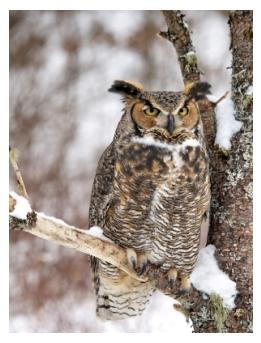
The Great Horned Owl, is native to the whole of North, Central and South America.
According to Wikipedia, these are adaptable birds with a vast range and are the most widely distributed true Owls in the Americas.
In this area, these birds nest in trees, both deciduous and coniferous, often in mixed forests and sometimes in urban areas.
A mated pair of Great Horned Owls remain in their own territory, but younger and individuals without mates, often move around within their territory as they search for companions - they may leave their areas in winter in search of food.
In these birds, the male is not as large as the female and they are often between 18 and 27 inches long, with a wingspan which can reach close to 5 feet.
They may weigh up to 3 lbs, however, in the northern part of their range, in the Arctic, for example, larger individuals may be found.
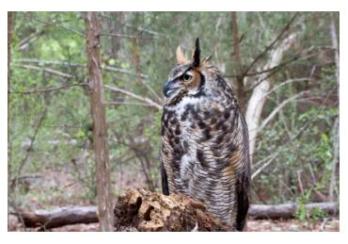
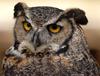
These birds are identified easily by their large ear tufts which give them their name, although these are not actually ears at all, but feathers.
They often have a brown or gray face and white patch on their throat, their eyes have a yellow iris and their feet and legs have feathers up to the talons.
These birds breed early in the year, usually in January or February in Ontario, having found a mate in December and often can be heard calling to each other in a duet!
Their favoured nests are those left by birds such as Red Tailed Hawks Crows, or even Squirrels, but they do build their own nests in trees, cliffs and empty buildings.
Laying 2 - 4 eggs each season, a pair will incubate these eggs for about 4 - 5 weeks and at 6 weeks old the little owlets can sometimes be seen out of the nest and sitting on nearby branches.
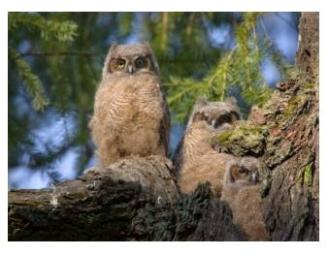
Within a week of leaving the nest, the little fellas will be trying to fly, although they are dependent upon their parents for food for the remainder of the summer and well into Autumn.
Most young Great Horned Owlets stay with their parents until they themselves are ready to breed, or until their parents are ready to again reproduce.
These three young Owlets are waiting patiently for their parents to come home with dinner!
Their call is a loud, low-pitched "Ho-ho-hoo hoo hoo", although it is sometimes only four "Hoo's" instead of five.
They hunt at night by perching in wait on a high branch, and swooping down on their victim. Their prey is varied, but is often small mammals such as hares and rabbits, rats, squirrels , mice and moles, voles, shrews, bats and weasels, and even other birds.
These birds do have some natural predators including
Red Foxes, Coyotes and cats, which may catch and eat their young and eggs, but there are hardly any animals which prey upon the adult birds, other than other Great Horned Owls and occasionally Eagles and
Snowy Owls.
Below is a short video, courtesy of YouTube, of the Great Horned Owl which I hope you enjoy as much as I did!
Great Horned Owl Info ...
The Great Horned Owl - All about Birds
Hinterland Who's Who - the Great Horned Owl
Lots of information about these wonderful nocturnal birds of Southern Ontario
Thanks to Dreamtime and Adam Borkowski for the use of the picture of the girl in green shirt 8406786Adam Borkowski|Dreamstime.com
Have you had a Great Horned Owl encounter you'd like to tell us about?
If you've had a Great Horned Owl sighting in Southern Ontario, we'd love to hear from you ... send us your pictures too!
What Other Visitors Have Said
Click below to see contributions from other visitors to this page...
Great Horned Owl, Ojibway complex, Windsor 
Ojibway Park is part of the Ojibway complex, in the city of Windsor, Ontario.
Many people go there daily, children and families.
I go there for …
Great Horned Owl nest
It was amazing to spot this beautiful bird and two young peeking out of their nest.
This was in early March, London, Ontario.
Great Horned Owl In Whitby Not rated yet
I live in Whitby Ontario, I actually grew up here. In all the years I've been here never have I seen an owl. I now live on Cochrane St. near Beech St. …
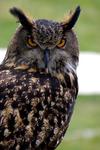
Lasalle Owls Not rated yet
I live in Lasalle and often hear Great Horned Owls in the very early morning hours before dawn.
Their call is usually four "Hoos", but sometimes only …
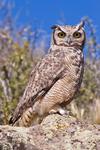
Cats are missing! Not rated yet
This big guy showed up before last fall (September 26th), and this week two cats are missing in my neighborhood.
Could he be responsible?
From his …
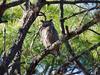
Great Horned Owl Sighting Not rated yet
This morning as I was popping my toast in I noticed a large image on a nearby tree branch.
I live in Port Stanley on Lake Line. This was Sunday, at …
Great Horned Owl in Whitby Not rated yet
I spotted this Great Horned Owl in the ravine system of Pringle Creek, north Whitby in August 2020! So cool!
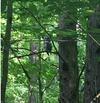
Owl sighting Not rated yet
While hiking on a hot day in the cool forest at North Walker Woods, just south of Uxbridge, Ontario, I noticed what looked like a large paper wasp nest …
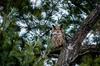
Nest Located for Great Horned Owl Not rated yet
My wife and I recently located the nest location for a Great Horned Owl in XXXX park. Over the past few days we have been back to visit and check up …
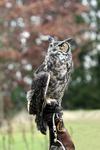
Great Horned Owl Encounters Not rated yet
Three of our readers wrote to tell us about their sightings of Great Horned Owls.
About 7 pm, it was sitting a top of a large spruce in the center of …
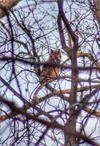
Great Horned Owl spotted Not rated yet
I’ve been waking through this forest for years and only now realize I was being watched!
Great shot - thank you for sending this to us!


If you enjoy this website, please consider making a donation to help us continue with this site!
Thank you!

Recent Articles


-
Indigenous Canadian Art
Dec 08, 25 08:00 AM
-
How I built this website
Dec 05, 25 07:00 AM

-
Immature Bald Eagle
Dec 03, 25 08:00 AM