DRESDEN
The Underground Railroad
& Uncle Tom's Cabin
The village of Dresden, Ontario, has connections with the Underground Railroad and Slaves, through the writings of Harriet Beecher Stowe, the author who wrote the novel “Uncle Tom’s Cabin”.
Dresden is located north of the city of Chatham, Ontario, and has a population of 2,800 people
Many people believe that Stowe based her characters on those in the autobiography of Josiah Henson who was an African-American who had lived and worked on a tobacco plantation in Maryland.
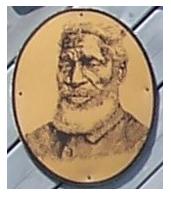
Josiah Henson had been born in slavery and was one of the first escaped slaves to write an account of his life and experiences.
Harriet Beecher Stowe apparently acknowledged that his writing had inspired her to write “Uncle Tom’s Cabin”
Before the Civil War, Stowe and her husband had lived in Cincinnati, Ohio, just across the Ohio River from Kentucky, which was a slave state at that time.
In Cincinnati there were many people who sympathized with the plight of the slaves.
The Underground Railroad came into being to help runaway slaves on their escape route northward, from the Southern States.
In Dresden today there is the Uncle Tom’s Cabin Historic Site which is on part of 200 acres of land purchased by Henson and other abolitionists.
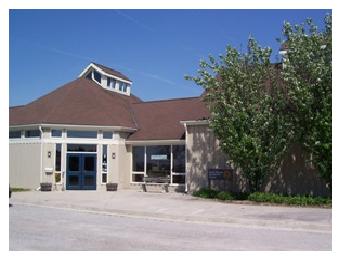
There, they founded the British American Institute, one of Canada’s first Industrial schools which was a place of refuge and safety for former slaves.
This historic site commemorates the life of Reverend Josiah Henson, and recognizes his contribution to the Underground Railroad and Slaves who gained their freedom.
Uncle Tom’s Cabin in this small community can be visited Tuesday to Saturday, 10:00am to 4:00pm, Sundays noon to 4:00pm, in July and August.
The museum is also open on Mondays between 10:00am and 4:00pm, and is located off highway 21, 28 km north of highway 401 (take exit 101 north, Kentbridge Rd and follow signs to Dresden)
For more information call: 519-683-2978
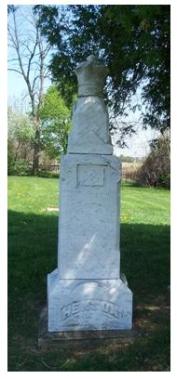
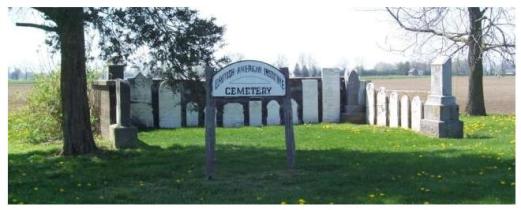
Beside the Museum you will find the Henson Family Cemetery and across the road there is the British American Institute Cemetery.
Today we can only imagine the wretched lives lived by those buried there.
Okay, so that is all the official stuff. Let me tell you about my visit to Uncle Tom’s Cabin.
When I had only been in Canada for a couple of years, I went to visit Uncle Tom’s Cabin in Dresden with my hubby and young children – what an eye opener it was for me!

We followed the pretty country roads as we drove down to Dresden, we wandered around the Museum and outbuildings, looking at all the instruments and equipment that had been used to punish slaves in the past – for me it was the most awful thing I had ever seen in my life.
I suppose I had always known that the Southern States had slavery, but to be confronted with the reality of their wretched lives, was something I had not been prepared for.
To be confronted by man’s inhumanity to man, on such a level was overwhelming to me.
There were devices in the Museum that fit around the necks of unruly slaves, which prevented them from lying down or relaxing. There were Brands which had been used for branding slaves. Posters advertising Slave Sales adorned the walls of the Museum.
All I can say is that if you are fortunate enough to live in a place and time where you have many Freedoms, then we should all thank the Good Lord for our Blessings!
Dresden was the destination of the Underground Railroad, and "Stations" along the route were usually about twenty miles apart. "Conductors" used covered wagons or carts with false bottoms to carry slaves from one station to another.
Runaway slaves usually hid during the day and traveled at night. Some of those who were active in helping the runaways, notified them of their stations by brightly lit candles in their windows or by lanterns positioned in the front yard.
By the middle of the 19th century it was estimated that the Underground Railroad had helped over 50,000 slaves escape from the South, to find freedom and a new life in the Northern States and Canada.
The Last Safe House: A Story of the Underground Railroad

A couple of fascinating aspect of the Underground Railroad and slaves is the use of songs and quilts – both of which allegedly held directions to freedom hidden in the pattern of the quilts, and in the Songs.
In an edition of the National Geographic News in 2004, two authors say African American slaves may have used a quilt code to navigate the Underground Railroad.
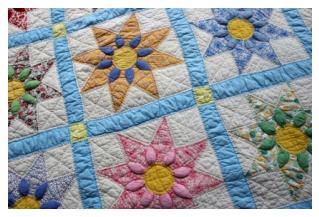
They believe that quilts with patterns named "wagon wheel," "tumbling blocks," and "bear's paw" may have contained secret messages that helped direct slaves to freedom.
Jacqueline Tobin and Raymond Dobard first proposed their quilt code theory in their book Hidden in Plain View: A Secret Story of Quilts and the Underground Railroad

In the book, published in 1998, the authors chronicled the oral testimony of Ozella McDaniel, a descendant of slaves. McDaniel claims that her ancestors passed down the secret of the quilt code from one generation to the next.
For example the Star Pattern in a quilt meant that the fugitive slaves were to follow the North Star and reach freedom.
The Wagon Wheel Pattern told slaves to pack their belongings because they were about to go on a long journey.
The Bear's Paw Pattern, may have directed slaves to head north over the Appalachian Mountains - follow the literal footprints of the bear as they always go to water and berries and other natural food sources.
If you are interested in making a "Slave Quilt" with the traditional patterns and the messages behind them, there are full instructions at e-How - How to Sew Slave Quilts While you are exploring the village of Dresden, take a look at the antiques at Tew Unique where you may just find that special antique you've been looking for!
For those who like The Casino and Slots, there is the Gateway Casinos Dresden which is open each day between 9 am and 1 am. Check out the details at Gateway Casinos Dresden
Dresden Links ...
National Geographic Site - Underground Railroad and Slaves Information This site gives lots of information about the Abolitionists, the Slave Trade, a time line of Slavery and the Underground Railroad Routes
Uncle Tom's Cabin Website The Official site of Uncle Tom's Cabin in Dresden, Ontario. This site has lots of interesting information and a Book list of reading materials and gift items on sale on the topic of the Underground Railroad and Slaves
Picture of child cooking courtesy of 4461902Barbara Oleksa|Dreamstime.com