NUTHATCHES
the acrobats at the bird feeder
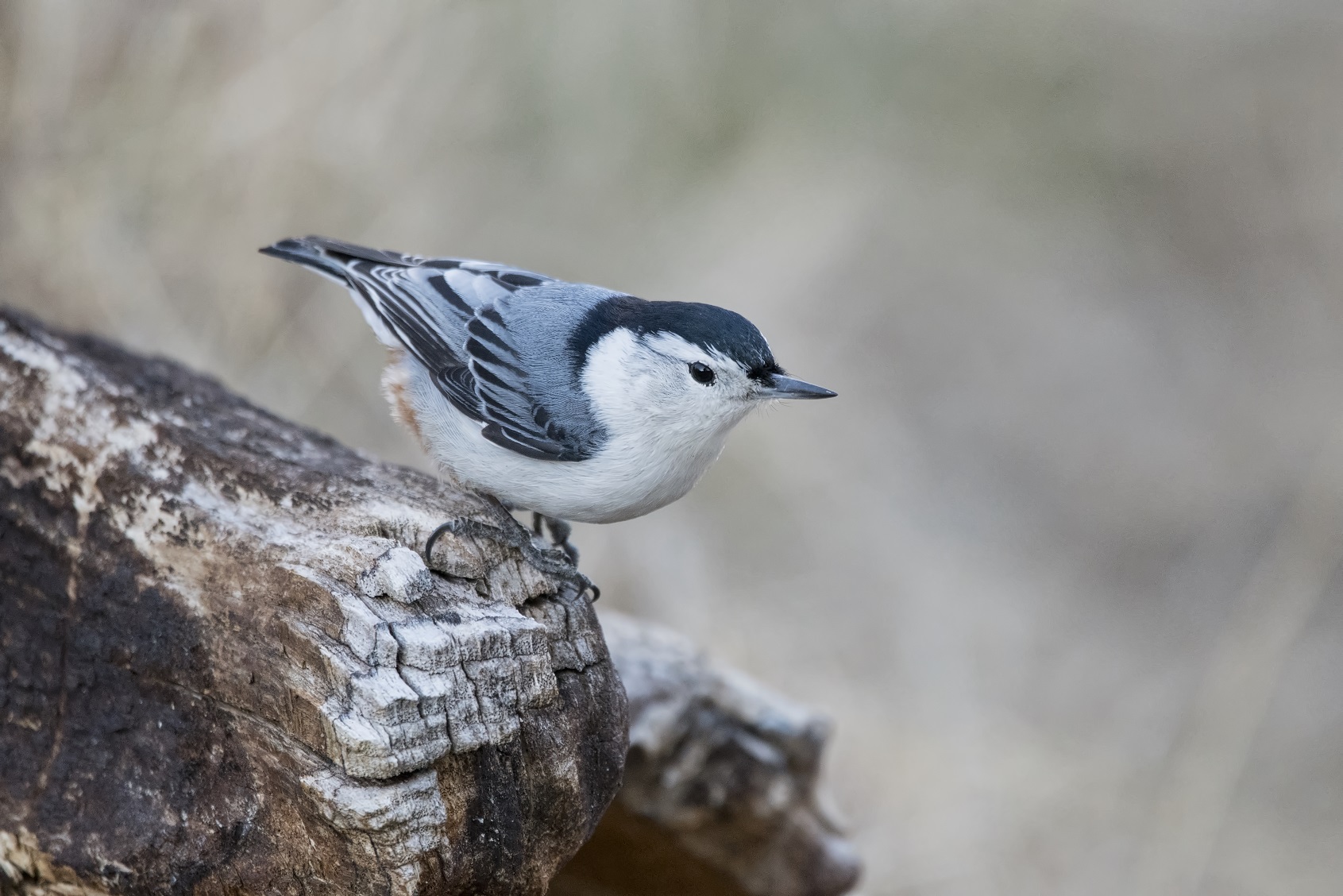
In this area of Southern Ontario there are two types of Nuthatches, the White Breasted (Sitta carolinensis) and the Red Breasted (Sitta canadensis) varieties.
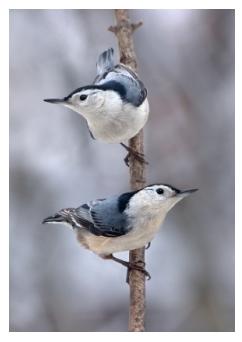
These small, agile, birds prefer to live in woodland however, a few species have adapted to rocky habitats, and we often see them at our bird-feeder in the garden, especially in the winter time.
They nest in Aspen, Oak, Birch, Cottonwood and Spruce trees and seem to prefer the forest edges and can be quite territorial toward other species of birds, and their own kind.
They build their nests in holes or crevices in trees, or in rocks and in some species, the size of the hole is cleverly reduced by the building of a mud wall.
They will also nest in a bird house if a suitable one is provided for them, in a quiet place in your garden or back yard.
There is little size or plumage difference between the male and female birds, and they are virtually indistinguishable from each other.
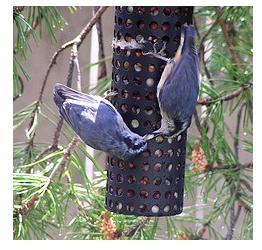
These little birds build their small nests of shredded bark, small twigs and grass, which are lined with soft fur or feathers, and the eggs are then incubated by the mother for 12 to 14 days.
These birds have the rare ability to climb down trees head first, unlike other species of birds such as Woodpeckers, which can only go upwards.
It is amusing to watch these interesting birds on trees or fences as they go up, down and around, either head up or head downward, its all the same to this agile little bird!
These little birds have relatively large heads, short tails and powerful beaks and feet and from beak to tail they measure around 4 to 5 inches in length.
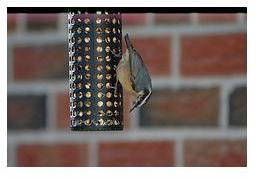
Their shape is distinctive, and all species are recognizable as Nuthatches, as they are all fairly similar to each other and are easily recognizable.
The Nuthatch is truly omnivorous, eating insects, grubs, nuts and seeds.
Most are resident in Southern Ontario year round, but the Red-breasted variety migrates from the north to the south of its range in winter.
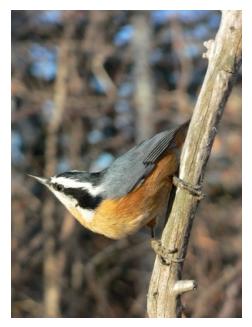
The name "Nut-hatch" comes from their habit of wedging a nut into a crevice of a tree and then cracking the nut open.
They will also do this with food they find at the back yard bird feeder - a sunflower seed, a piece of suet or a nut and often they take their food to a nearby tree where they wedge it in a cavity, then peck at the food!
This picture shows very well the plumage of the Red Breasted variety of this amusing bird.
Nuthatches Info ...
Nuthatches - according to Wikipedia
These birds are very vocal, using an assortment of whistles, trills and calls - find out more about "les sittelles"



Recent Articles


-
The friendly Chickadee
Jan 29, 26 06:00 AM
-
The City of St Thomas
Jan 22, 26 07:00 AM
-
Leamington, Ontario
Jan 20, 26 10:00 AM